Why a Batter Can Be Out Without the Ball Hitting the Stumps
Why a batter can be out without the ball hitting the stumps: distinguish caught, run out, stumped, hit wicket and lbw by the event that triggers each dismissal.
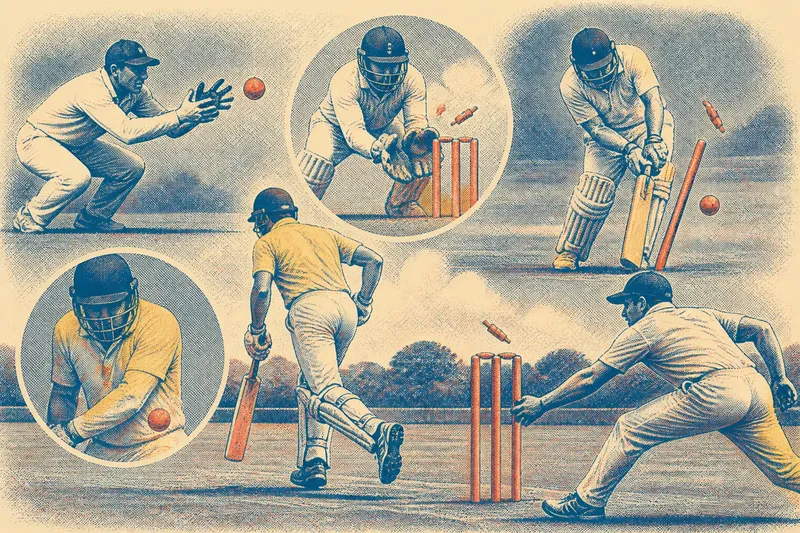
Why can a batter be out without the ball hitting the stumps? A batter can be out without the ball hitting the stumps because cricket’s dismissal laws also cover catches, a batter being short of their ground, and other specific events.
Start with what happened, then identify the dismissal it may fit. The order of contact, the batter’s position and the type of delivery can all matter. For a formal decision, the Laws of Cricket and the competition’s playing conditions determine the precise ruling.
Ball caught in the field
A batter may be out caught if a fielder completes a valid catch before the ball touches the ground. The shot might be a defensive push, a mistimed drive or an edge; it does not have to send the ball towards the stumps.
Check whether the ball touched the ground before the catch was completed and whether the relevant contact was with the bat or a hand holding it. If the ball bounced first, caught does not apply, although another dismissal may still be possible.
Say you see a batter push the ball gently towards a close fielder, who gathers it just above the turf. If the ball has not touched the ground and the catch is valid, caught may apply; if it bounced, consider whether another event, such as a run-out attempt, occurred.
Wicket exposed by play
Stumping may apply when the wicketkeeper puts down the wicket while the batter is out of their ground, in the circumstances covered by the law. It commonly follows a batter stepping out to play or leave the crease, but the delivery and whether a run was being attempted matter; a no-ball cannot result in a stumping.
Hit wicket is different. It may apply if the batter breaks their own wicket with their body or equipment in a situation covered by the law, such as while receiving the delivery or setting off for a run. No fielder needs to hit the stumps.
Short of the ground
A run out may apply when a batter is out of their ground and a fielder fairly puts down the wicket while the ball is in play. This can happen during an attempted run or when a batter turns back. The batter whose ground is broken is the one at risk.
A fielder may use the ball to dislodge a bail directly, or throw it so that the wicket is put down. The ball does not have to hit the stumps first. What matters is whether the batter had made their ground when the wicket was broken.
Imagine a batter sets off for a single, then turns back as a throw comes in. If the wicket is put down while the batter is still short of the ground, run out may apply. If the batter has made their ground first, that particular run-out opportunity has passed.
Ball strikes the body
Leg before wicket, usually called lbw, may apply when a delivery hits the batter’s body and meets the law’s conditions. The decision depends on relevant details such as where the ball pitched, where it struck and whether it would have gone on to hit the wicket. If the ball touches the bat before the body, lbw does not apply.
Do not treat the batter’s attempt to play a shot as a universal lbw requirement. The law’s conditions vary with the circumstances, and the umpire must assess the applicable test. For an appeal, follow the sequence of events and the ball’s projected path rather than treating any one detail as decisive on its own.
Questions about dismissals?
Can a batter be out caught if the ball hits the ground?
No. For caught, the fielder must complete the catch before the ball touches the ground. A bounce rules out caught, but does not automatically prevent another dismissal.
What is the difference between stumped and run out?
Stumping involves the wicketkeeper putting down the wicket when the batter is out of their ground in the circumstances covered by the law; a no-ball cannot produce a stumping. Run out applies when a batter is short of their ground as the wicket is put down, often during an attempted run.
Can a batter be out hit wicket without a fielder touching the stumps?
Yes. Hit wicket may apply when the batter breaks their own wicket with their body or equipment in a situation covered by the law. The cause is the batter’s contact with the wicket, not a fielder’s action.
Can a batter be out lbw if the ball hits the bat first?
No. If the ball touches the bat before it hits the batter’s body, lbw does not apply. If the ball then carries to a fielder and is caught before touching the ground, caught may still apply.
Identify the event first
Use this quick check to decide which dismissal to consider next:
- Observation: A fielder catches the ball before it touches the ground. If the catch is valid, then consider caught; if the ball touched the ground first, then rule out caught and check for another dismissal.
- Observation: The wicketkeeper puts down the wicket while the batter is outside their ground. If the delivery and circumstances meet the stumping law, then consider stumped; if it is a no-ball or a run was being attempted, then assess the relevant alternative, including run out.
- Observation: A fielder puts down the wicket while a batter is short of their ground. If the ball is in play and the wicket is fairly broken, then consider run out; if the batter had made their ground first, then rule out that run-out opportunity.
- Observation: The batter’s body or equipment breaks their own wicket. If this happens in circumstances covered by the hit-wicket law, then consider hit wicket; if it does not meet those conditions, then do not infer the dismissal from contact alone.
- Observation: The ball hits the batter’s body. If the applicable lbw conditions are met, then consider lbw; if the ball touched the bat first, then rule out lbw and check whether another dismissal applies.
- Observation: The ball’s pitch, impact point or projected path is uncertain. If the relevant facts can be established, then assess the applicable lbw conditions; if they remain unclear, then avoid a firm conclusion and defer to the umpire and competition rules.
Think of the wicket as a door latch: it is one visible part of a dismissal, not the only event the laws address. To understand why a batter can be out without the ball hitting the stumps, identify the event first, then check the conditions that apply to that dismissal.
When the order of contacts, the delivery or the batter’s position is disputed, the playing conditions and Laws of Cricket settle the formal decision. Check the applicable rules or ask a qualified umpire rather than relying on a replay impression alone.