A First Test Match: Follow the Session, Not Every Ball
Follow a first Test match by tracking each session’s aim, the innings at the break and the clues that show how the longer contest is shifting.
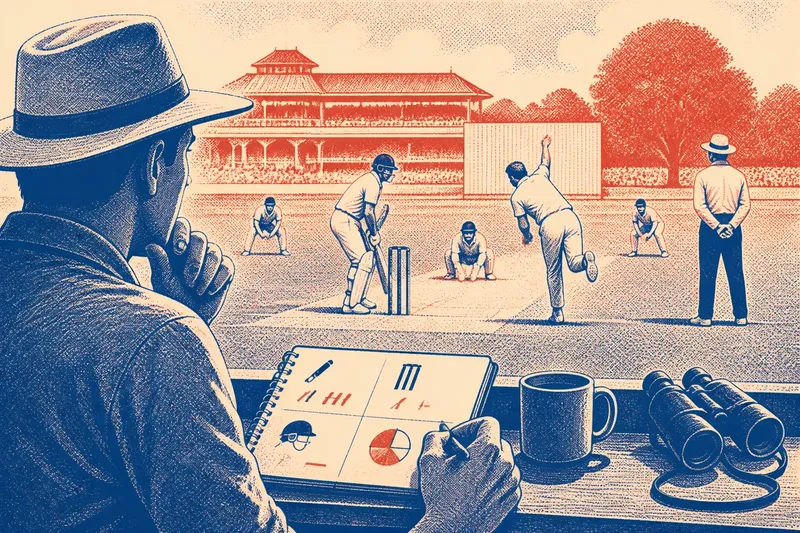
How do you follow a first Test match when the ball seems to travel only a few yards and the score changes slowly? Track the session rather than trying to decode every delivery. A session gives you a manageable stretch of play to watch, then a natural pause to ask what changed and what each side needs next.
Test cricket is played over several days, with each team usually having two innings. That gives captains and batters room to balance patience against urgency. Your job as a viewer is not to predict the finish; it is to notice how the day’s conditions, the remaining wickets and the match situation shape the next passage of play.
What is a session?
A session is a scheduled block of play within the day, separated from the next block by a break. The exact schedule can vary with local conditions and the match arrangements, so follow the broadcast’s clock and session labels. For a first viewing, treat each session as a chapter with its own question: what is this team trying to achieve before the next pause?
At the start of a day, the answer may be to settle in and preserve wickets. Later, the batting side might look to score more freely, while the fielding side tries to create a chance before the break. The aim can change within a session, but the break provides a useful point to take stock.
What should I watch?
Watch the relationship between the score, wickets and time left in the session. A score by itself tells you little: a steady total with few wickets lost may be a sound platform, while a similar total after several dismissals could leave the batting side exposed. Notice who is batting, who is bowling, and whether the captain changes the field or brings on a different bowler.
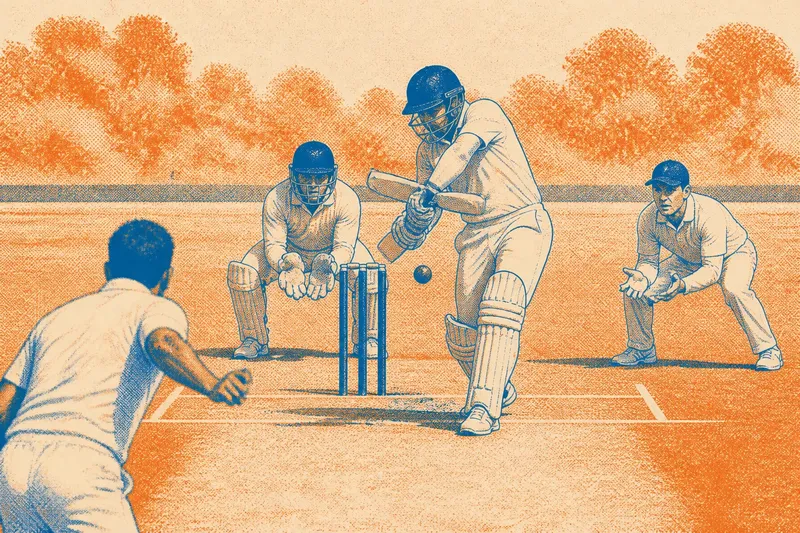
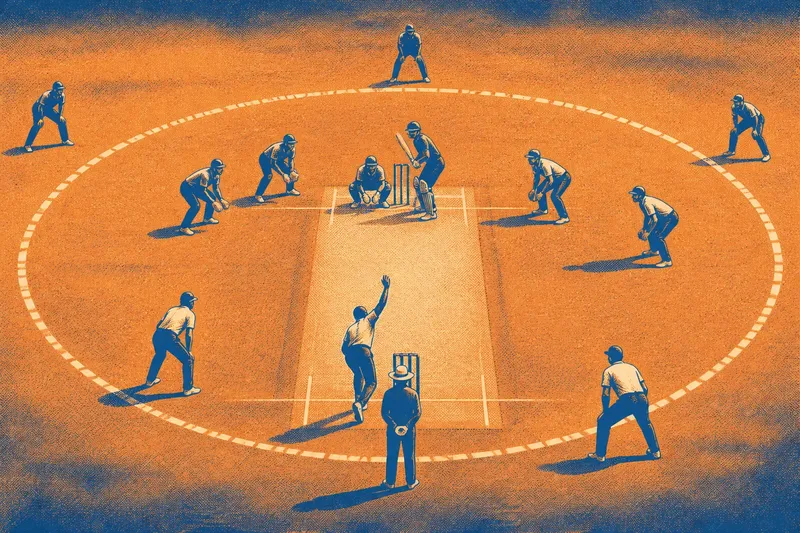
You do not need to understand every fielding position to see a tactical adjustment. A field with more players close to the batter can suggest the bowling side is pressing for a mistake. More protection on the boundary may indicate concern about scoring shots, or a plan to let the batter take a risk. Read these clues alongside the bowling length and the batter’s response, rather than treating one field change as a complete explanation.
Keep an eye on the pitch and the ball as the day progresses. Does the ball swing in the air, turn after pitching, or seem to come more slowly off the surface? Does the batter begin leaving deliveries that were previously tempting? These observations help explain why a team might change its approach, without requiring you to know exactly what will happen next.
How do I read a break?
At each break, note four things: the score, wickets lost, the batters at the crease and the match situation. Then ask whether the side batting has made the progress it needed, and whether the bowling side has created pressure or taken important wickets. A quick note on your phone is enough; no detailed scorecard analysis is needed.
- Score: Has the innings moved forward steadily, or stalled?
- Wickets: How many chances does the batting side still have before its innings ends?
- Batters: Are established batters still in, or has a new batter just arrived?
- Context: Is this the first innings, a reply to an earlier total, or a later innings with a target to chase?
Think of a break like checking the contents of a shopping basket before joining another queue: you do not need to recall every item picked up along the way, only what is there now and what still needs doing. In cricket, the checkpoint is the state of the innings, and the next session starts with that position in view.
What changes across the day?
There is no fixed script, but the balance of the contest can shift as the light, surface and workload change. Early in a day, the bowling side may find it easier to move the ball, while the batters work to settle. As conditions change, batting may become more comfortable, or the pitch may offer the bowlers different ways to threaten. Weather and interruptions can also alter the time available.
Imagine you start watching with a batting side at a modest score and only a few wickets down. By the first break, its established pair has added runs without giving away a wicket. The observable change is that the side has protected its remaining options and may be able to consider scoring more freely; the bowling side, meanwhile, needs a new plan or a breakthrough. The next session is interesting because the balance has moved, not simply because the score is larger.
By a later session, fatigue can matter. A captain may rotate bowlers to keep them effective, and batters may become more willing to attack if the innings needs momentum. If the side is defending, the priority may instead be to keep taking wickets and limit scoring. The same delivery can carry a different level of risk depending on the match position.
How does a session fit the match?
Keep the innings sequence in mind. Each team bats twice, and the first innings totals provide an early comparison, not a verdict. When one side finishes its first innings, the other has a chance to reply. Later, the match may turn on whether the side batting last can reach a target or avoid being dismissed before the contest runs out of time.
At a break, ask which team has the more useful position rather than who is “winning” the session. A batting side can score well but lose too many wickets; a bowling side can concede runs yet take the wickets that expose the lower order. A team’s needs depend on the lead or deficit, the innings still to come and how much play remains.
Why can a session feel slow?
A quiet spell often reflects a deliberate contest. A batter may leave balls outside the stumps, defend deliveries aimed at the stumps and wait for a scoring opportunity. The bowler may keep a consistent line to make that patience difficult. If neither side makes an obvious move, watch for small shifts: a change of bowler, a tighter field, a new batter, or a batter beginning to play more confidently.
Does every ball need close attention?
No. Follow the score and the broad contest, then focus more closely when a new batter arrives or the field changes. Those moments often show a shift in the session’s purpose.
What does a wicket change?
A wicket brings in a new batter and gives the bowling side a fresh chance to build pressure. Its importance depends on the score, the batters remaining and the match situation, not simply on when it falls.
Why do teams sometimes bat slowly?
Batters may be protecting wickets, adjusting to the conditions or trying to wear down the bowlers. A slower rate can still serve the team if it leaves the innings in a stronger position.
What should I remember after the day ends?
Keep the final score, wickets lost, innings position and any remaining target or deficit. That gives you a clear starting point next time, even if you missed much of the day’s play.
For a first Test match, the session is the simplest useful unit of attention: watch the aim, check the innings at the break, then see whether the next passage changes the balance. Follow that rhythm and the long match becomes easier to read without turning every delivery into a test of your knowledge.
When you return to a first Test match after a break in your viewing, look first at the score and wickets rather than the last dramatic moment you remember. That small reset helps you see what the teams need now—and gives the next session a clear story to follow.